


 Loading...

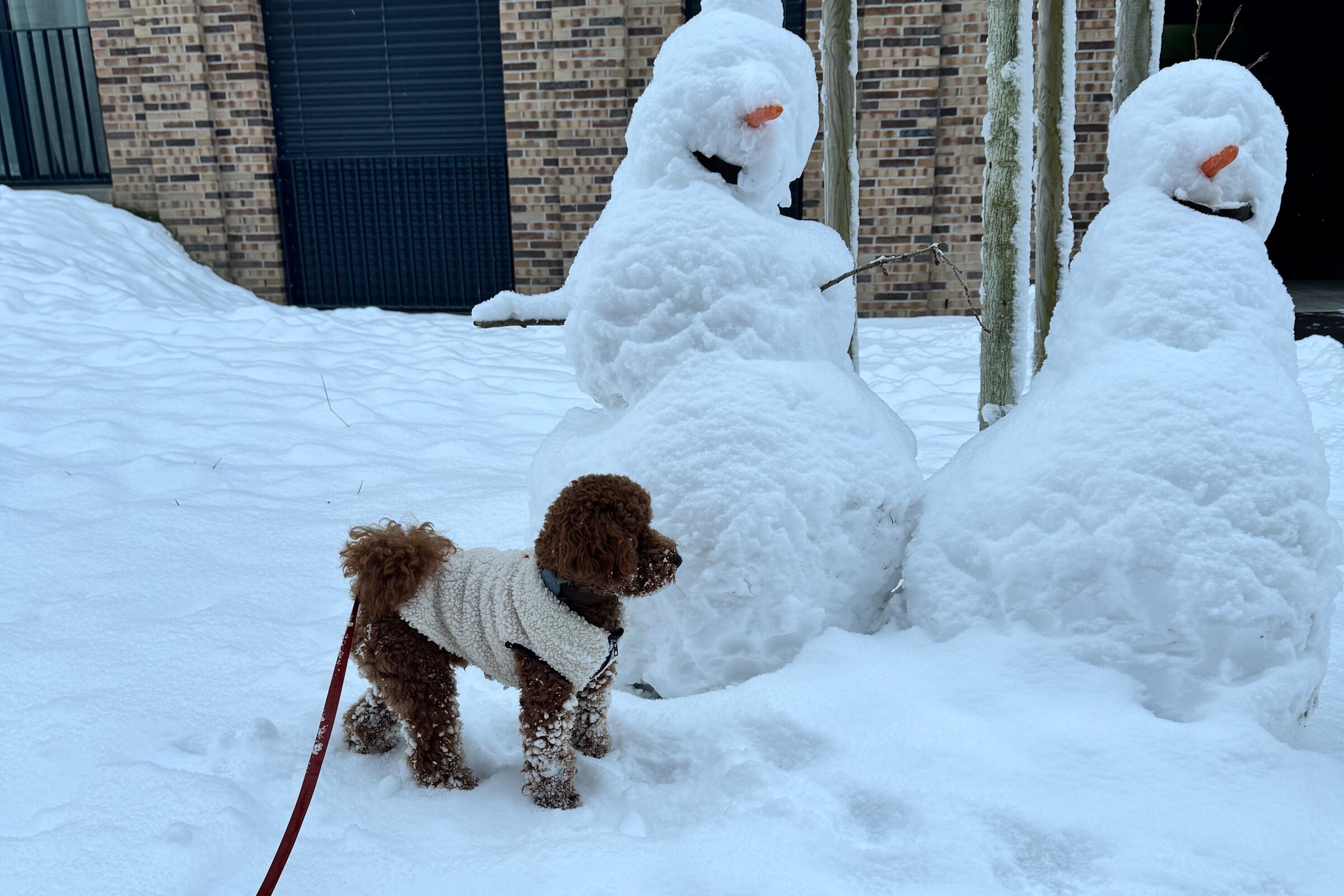
Every winter, many of us let the coat grow a little longer to keep our dogs cosy. It makes sense: a long, fluffy coat looks like the perfect winter jacket. Yet wet walks, harness straps and dry indoor air quietly turn soft fur into knots, often where they are hardest to spot. Winter is matting season, and the season of salted pavements too. Here is how the dog groomers at Bark & Beauty in Adliswil approach the colder months, and what you can do at home.
Winter in 30 seconds
- Brush five minutes a day, down to the skin, and finish with a metal comb.
- Rinse and dry the paws after every walk on salted ground.
- Dry the coat right down to the skin after a bath or a wet walk.
- Book a dog groomer for any mat the comb cannot pass. Never cut it out with scissors.
Why a long winter coat is not always a warm one
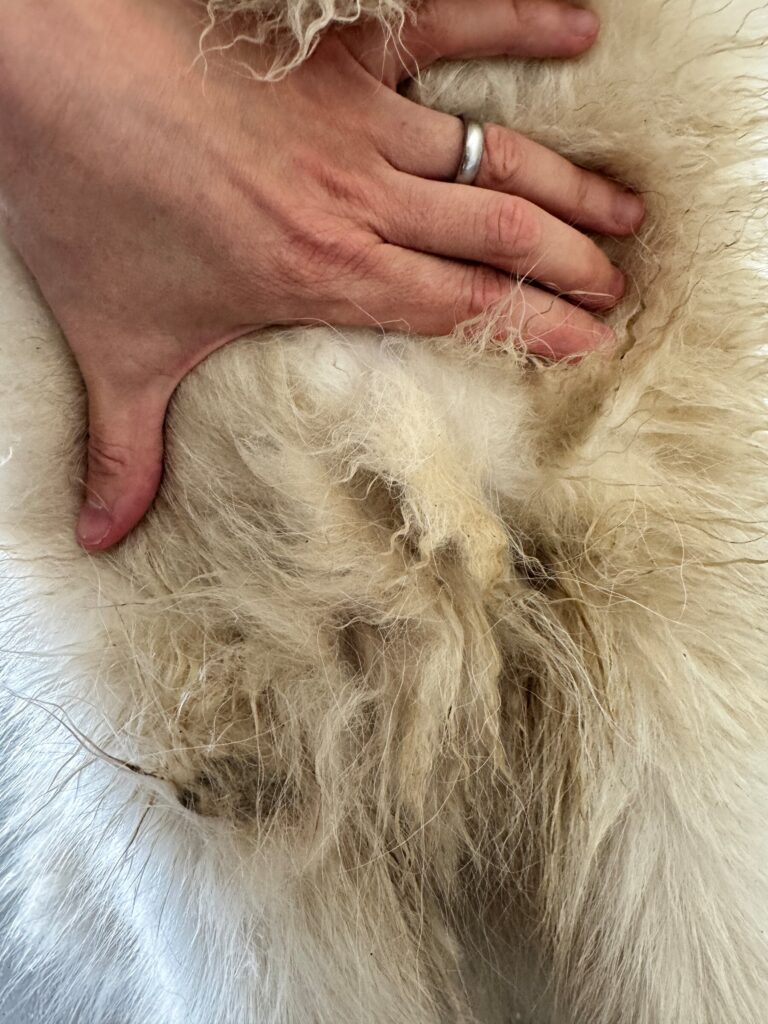
A coat keeps a dog warm by trapping a layer of still air close to the skin, which only works when each hair can stand freely. Mats collapse that layer. Matted fur holds moisture, presses against the skin and pulls with every step, so a matted dog is often colder, not warmer.
Three things make winter especially hard on coats:
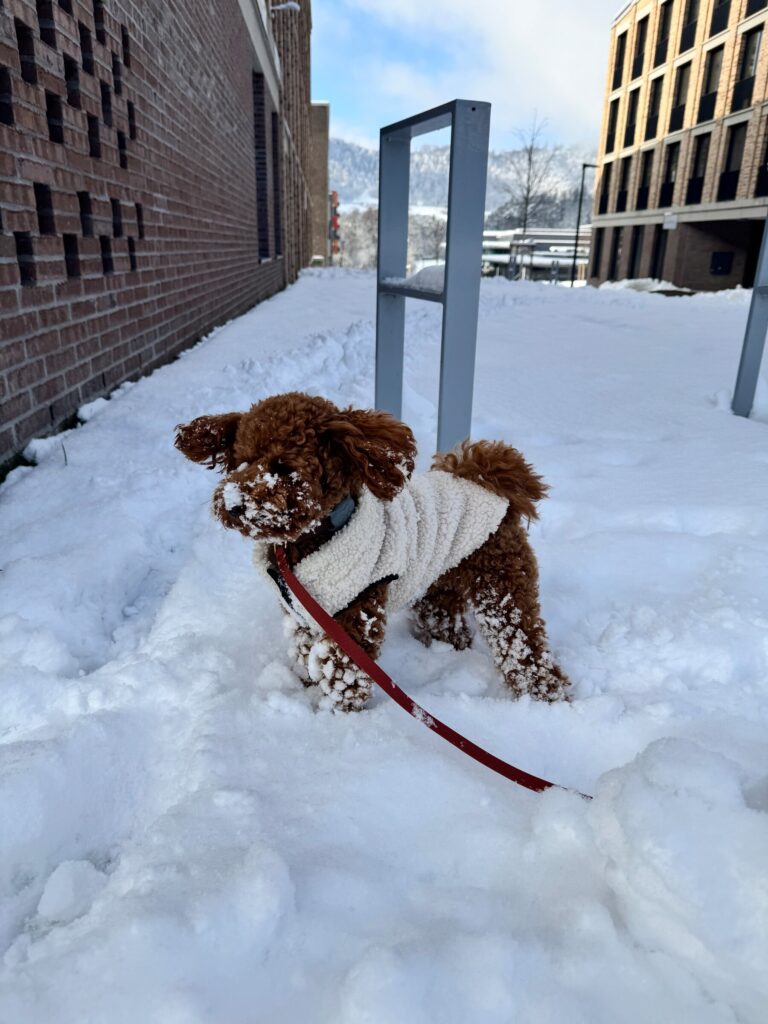
- Moisture. Snow and slush soak in on every walk, and hair left damp tangles fast, especially in curly coats such as poodle crosses.
- Friction. Jumpers, coats and harness straps rub the armpits, chest and back all day.
- Dry indoor air. Central heating makes hair brittle and quicker to knot.
In double-coated breeds, loose undercoat that is not brushed out stays trapped and becomes the starting point for mats. Our guide to autumn shedding explains what is going on underneath.
A bath in winter is perfectly fine, as long as the coat is dried right down to the skin. Trapped moisture is the problem, not the water.
How to protect your dog’s paws from road salt
Swiss winters mean salt and grit on almost every pavement. Salt dries out the paw pads until they crack, stings in any cut and upsets the stomach when it is licked off. The Small Animal Clinic at the University of Zurich warns that ice, slush, road salt and grit are especially hard on paws, and advises against letting dogs eat snow.
After every walk:
- Rinse the paws in lukewarm water, never hot.
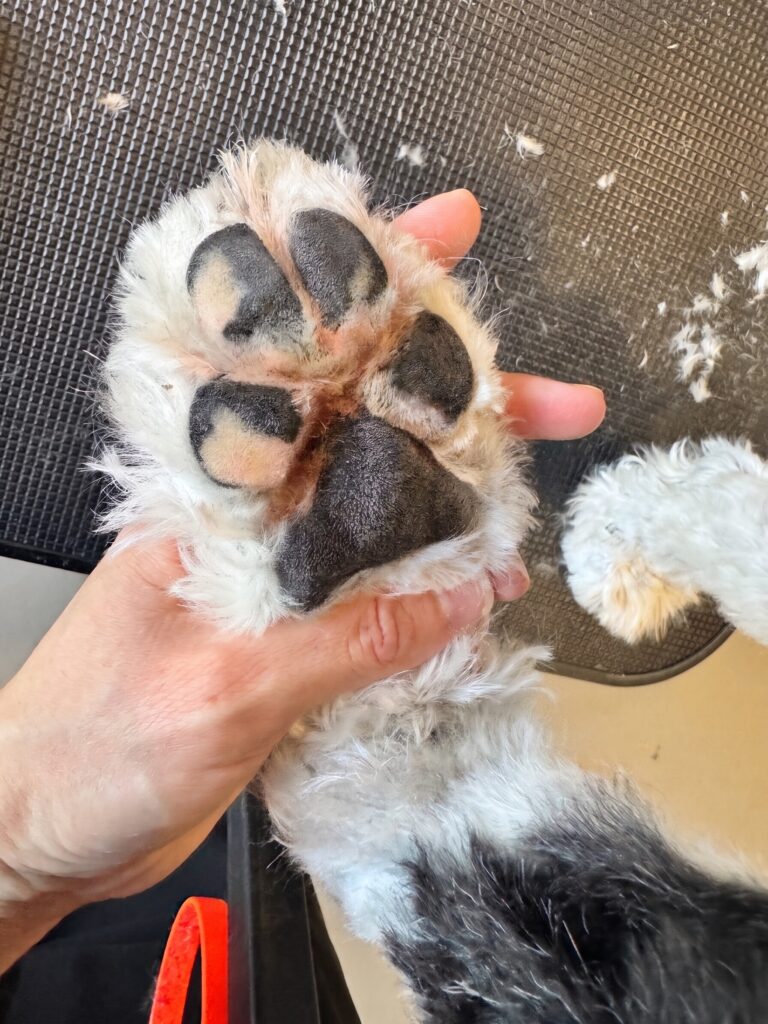
- Run your fingers between the toes to loosen grit and ice.
- Dry thoroughly, including between the pads.
- Check for redness, cracks or limping. Deep cuts or bleeding are a job for your vet.
Before a walk, a thin layer of paw balm made for dogs forms a protective film. It will be licked off sooner or later, so make sure it is dog-safe.
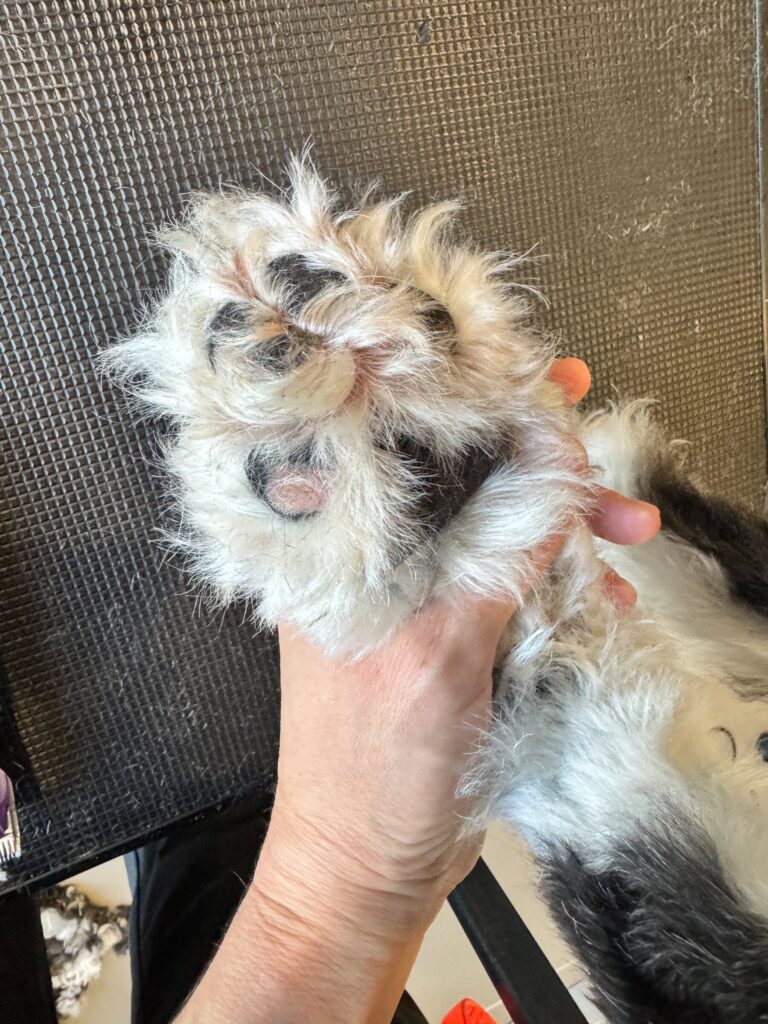
Long hair between the pads collects snow in hard little ice balls that pull with every step. Keeping it trimmed level with the pads is one of the simplest winter comforts, and a good dog groomer does it at every visit. If your dog still lifts a paw on salted ground, try booties, introduced indoors one paw at a time with plenty of treats.
The five-minute brushing ritual
Five calm minutes a day do more than an hour of wrestling once a fortnight. Think of it as a quiet moment together rather than a chore.
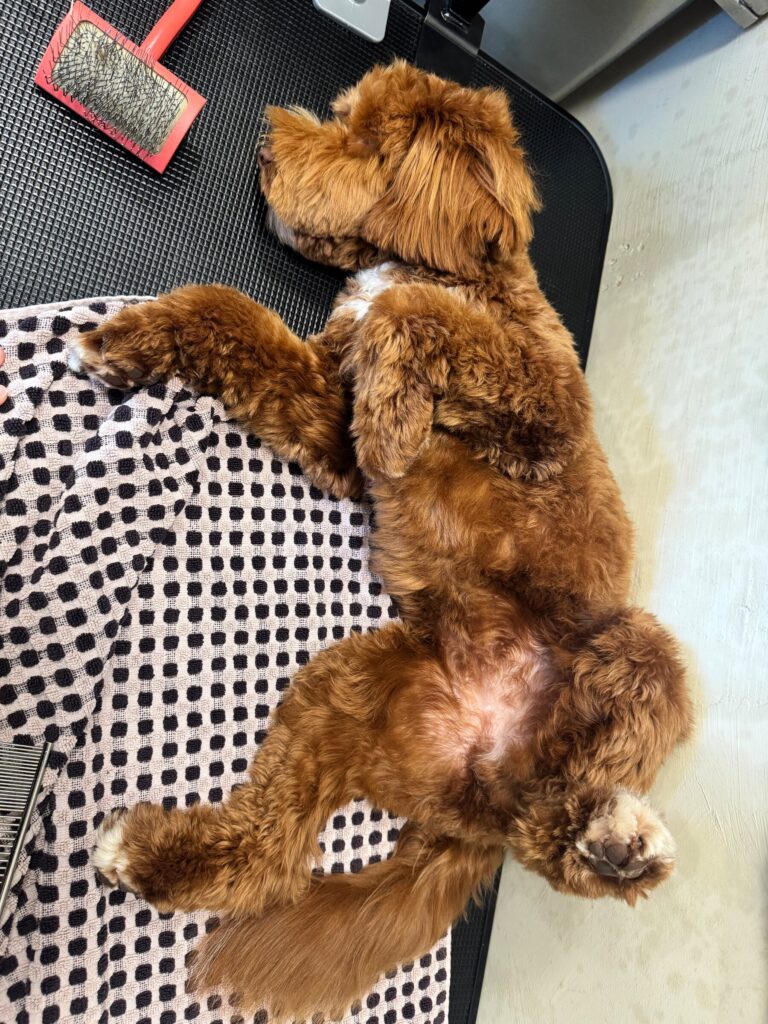
- Same time, same place. After the evening walk, once the coat is dry, on a non-slip mat or a soft towel.
- Start where your dog loves to be touched, usually the chest or shoulders. Leave paws and tail for later.
- Brush in small sections, down to the skin. Lift the coat with one hand, brush the layer underneath, then check with a metal comb: if it glides from skin to tip, that section is done.
- Visit the hot spots: behind the ears, the armpits, the collar line, under the harness and the backs of the legs.
- Watch the signals. Lip licking, yawning, turning away or freezing mean your dog needs a pause.
- End on a good note with a treat, a chew or a cuddle, so tomorrow is easier.
If the comb meets a mat it cannot pass, please do not cut it out with scissors. Mats sit tight against the skin, and it is very easy to nick the skin underneath. Book in with a dog groomer instead.
Dressing for the weather without the tangles
For small, short-coated, senior or thin-coated dogs, a well-fitted coat is a real comfort. To keep the fur underneath healthy:
- Fit comes first. A coat that slides around rubs, so it should sit snugly without pulling at the armpits.
- Choose smooth linings, which are kinder to long coats than rough knits.
- Take it off at home, especially when it is wet. A damp coat left on is a mat in the making.
- Brush where it sits, two minutes under the straps and seams.
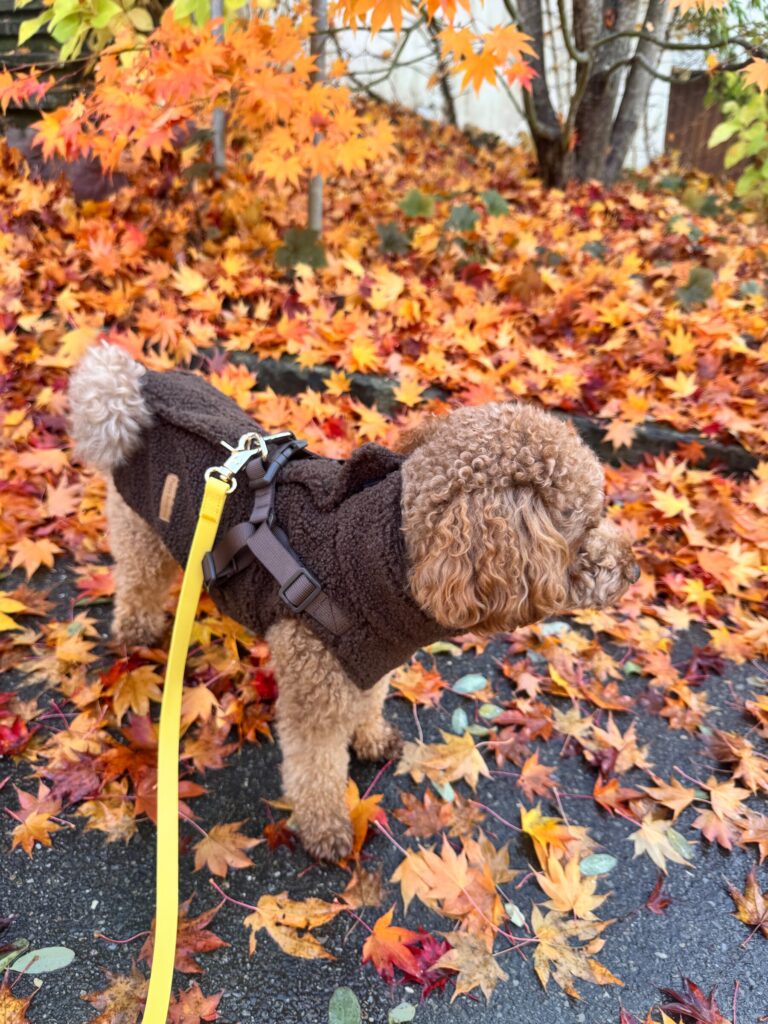
Not sure what fits? The Bark & Beauty boutique stocks winter coats your dog can try on at the studio, along with the brushes and combs from the ritual above.
Booking your dog’s winter groom
A simple rhythm keeps a coat comfortable all winter: a full groom for the haircut, nails, paw pads and ears, with a bath and brush in between to wash out salt, dry the coat to the skin and catch small knots before they become mats. It also avoids the spring shave-down that so often follows months of tangles.
At Bark & Beauty, that means the Signature Full Groom with a Bath & Brush top-up between visits. The studio works at a calm, unhurried pace. A winter groom includes a thorough bath and a dry right down to the skin, de-shedding where the coat needs it, styling, a tidy paw trim, nail care and a gentle check of ears and skin.
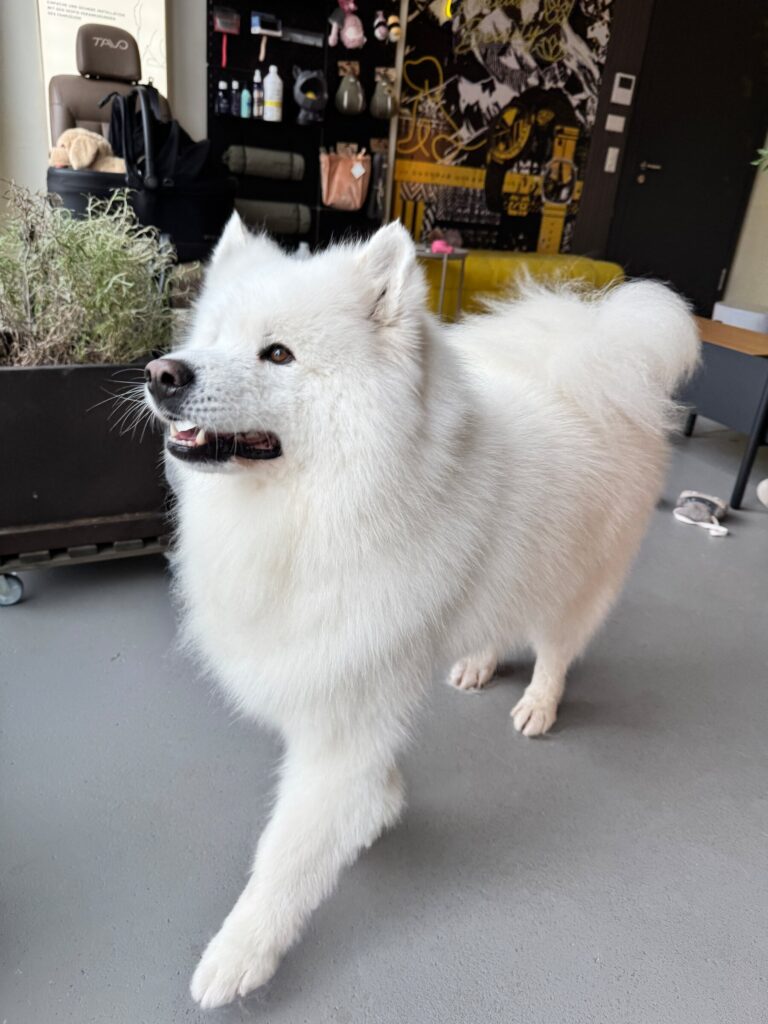
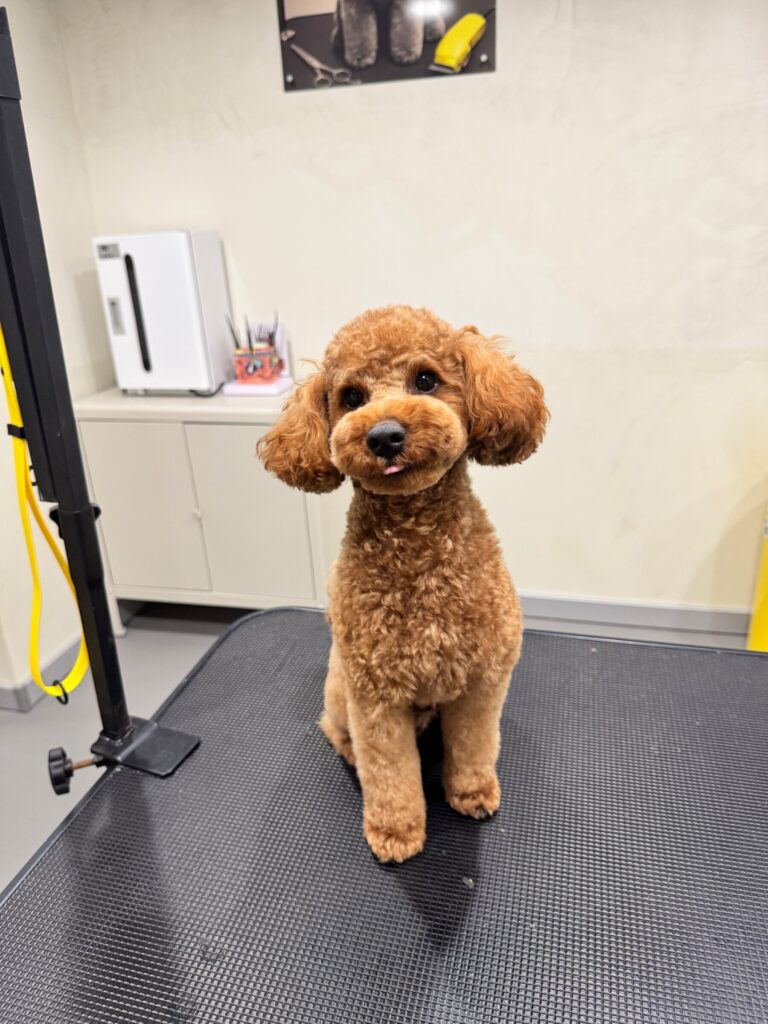
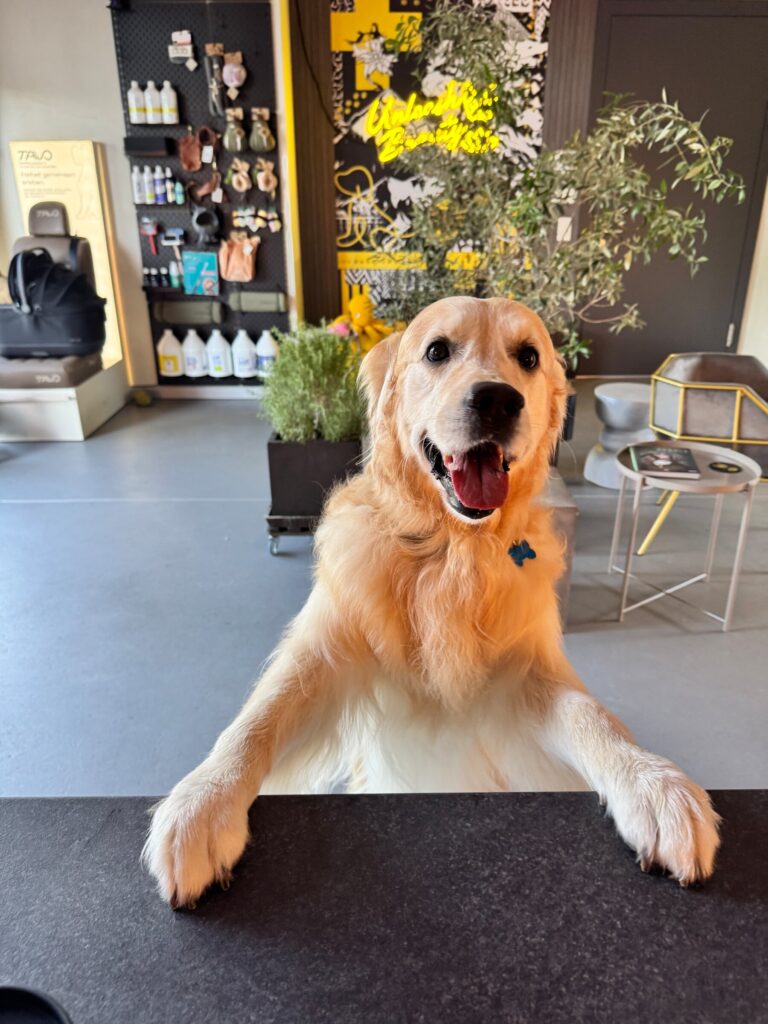
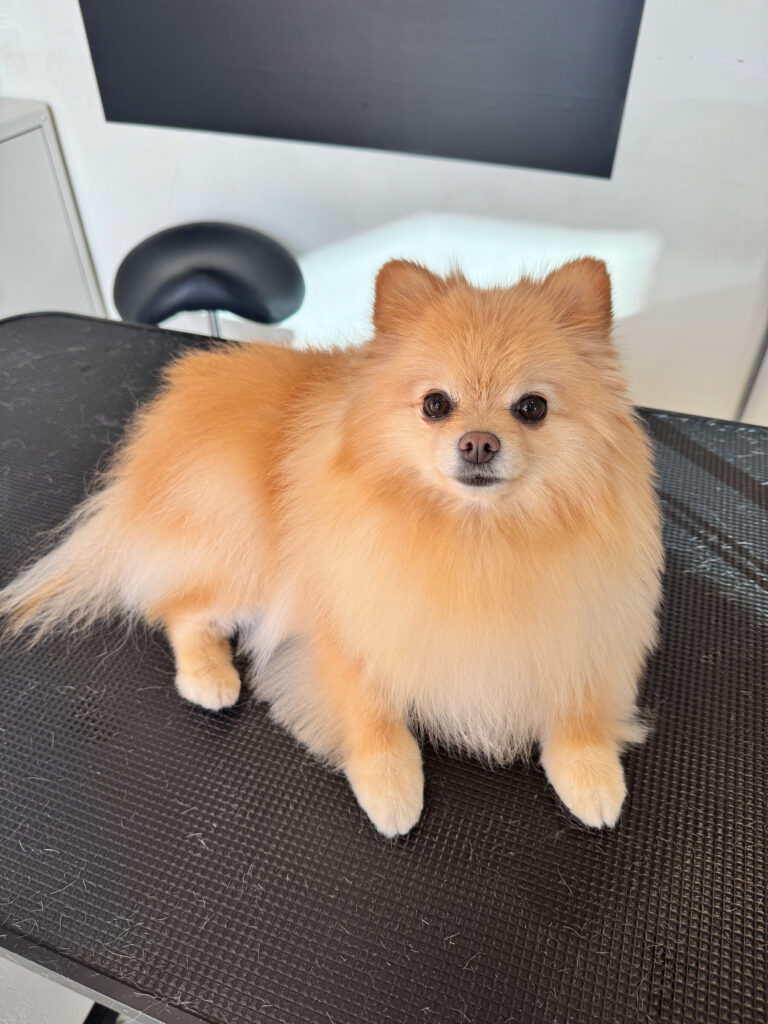
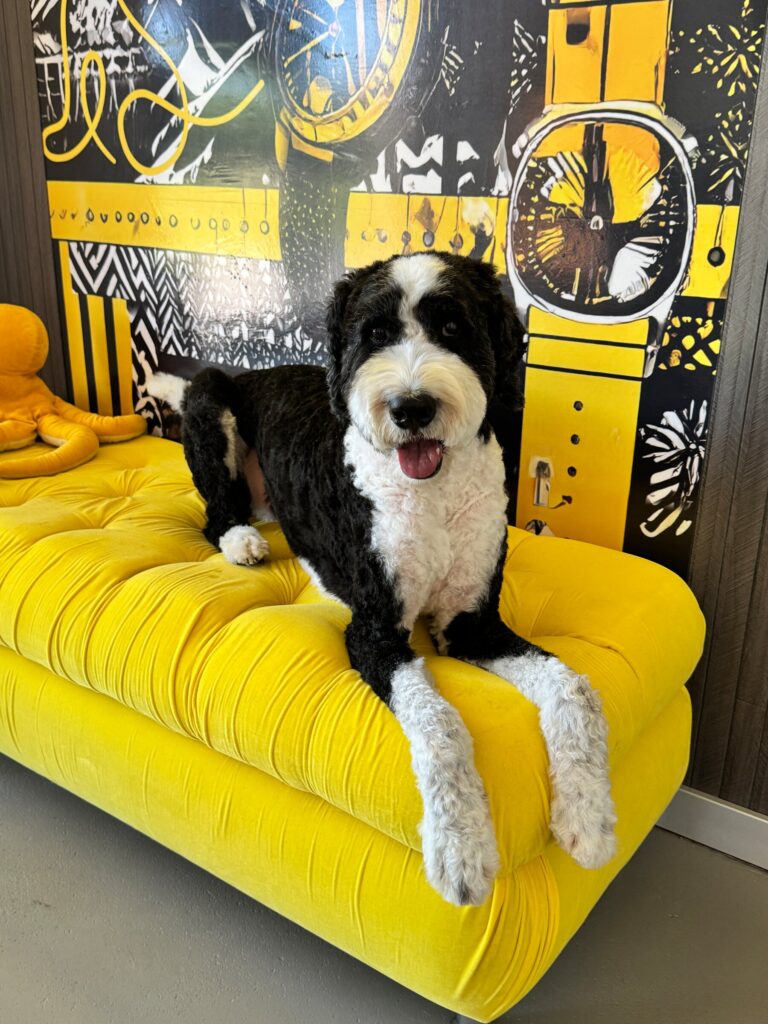
The weeks before Christmas fill up fast, so book early at book.barkandbeauty.ch.
Wishing you and your four-legged family a warm, calm and cosy winter.