


 Loading...
Your dog leans in for a kiss, eyes full of devotion, and at the last second you turn your cheek like a stunt double. The love is real. The breath, less so.
Most of us know more about our dog’s coat than about the 42 teeth behind that grin. So let us fix that: meet the teeth, learn what is safe and what is not, and turn tooth cleaning into something your dog does not run away from.
Meet the 42
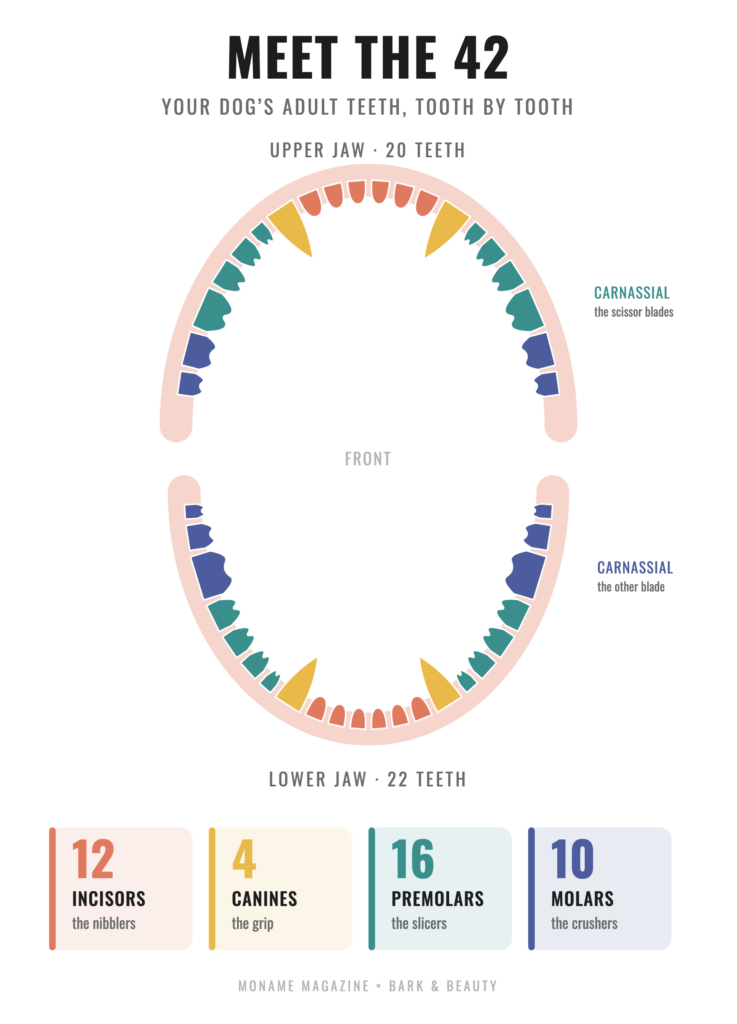
Your dog has 42 adult teeth. You have 32, and you needed braces. Think of them as a toolkit rather than a smile:
- 12 incisors at the front, the nibblers. For grooming, and for removing a single pea from a bowl of dinner.
- 4 canines, the fangs. The grip, and the teeth that hold the tug rope while your dog looks you dead in the eye.
- 16 premolars along the sides, the slicers. The biggest pair, the carnassials, work like scissor blades, which is why a chicken wing disappears in four seconds.
- 10 molars at the very back, the crushers, for kibble and the occasional stolen crouton.
And what you can see is only the top of the story. Roughly 60 per cent of each tooth is root, hidden under the gum. Your dog’s mouth is mostly iceberg.
A tooth timeline
Weeks 3 to 6: 28 needle-sharp puppy teeth arrive. Your socks will never be the same.
Months 3 to 7: the puppy teeth fall out and 42 adult teeth move in. You rarely find the baby teeth, because your puppy swallowed the evidence. In small breeds a baby canine sometimes refuses to leave, so if you spot a double fang, mention it to your vet.
Year 1: pearly white. Take photos.
Years 2 to 4: a little yellow appears on the back teeth. That is plaque turning into tartar. If you have not started brushing yet, this is your last easy chance.
Years 5 and up: gum disease risk climbs with age. The Royal Veterinary College’s VetCompass study of over 22,000 UK dogs found a dog over 12 has nearly four times the odds of a dog aged two to four. Small dogs under 10 kg had three times the odds of big ones, because 42 teeth in a tiny jaw get crowded. Toy Poodles, King Charles Spaniels, Cavaliers and, oddly, Greyhounds topped the list. Labradors and German Shepherds sat at the lucky end.
Good news to balance that: dogs almost never get cavities, so your dog will very likely never need a filling. What dogs get is gum trouble, and gum trouble is very preventable.
What bad breath is actually saying
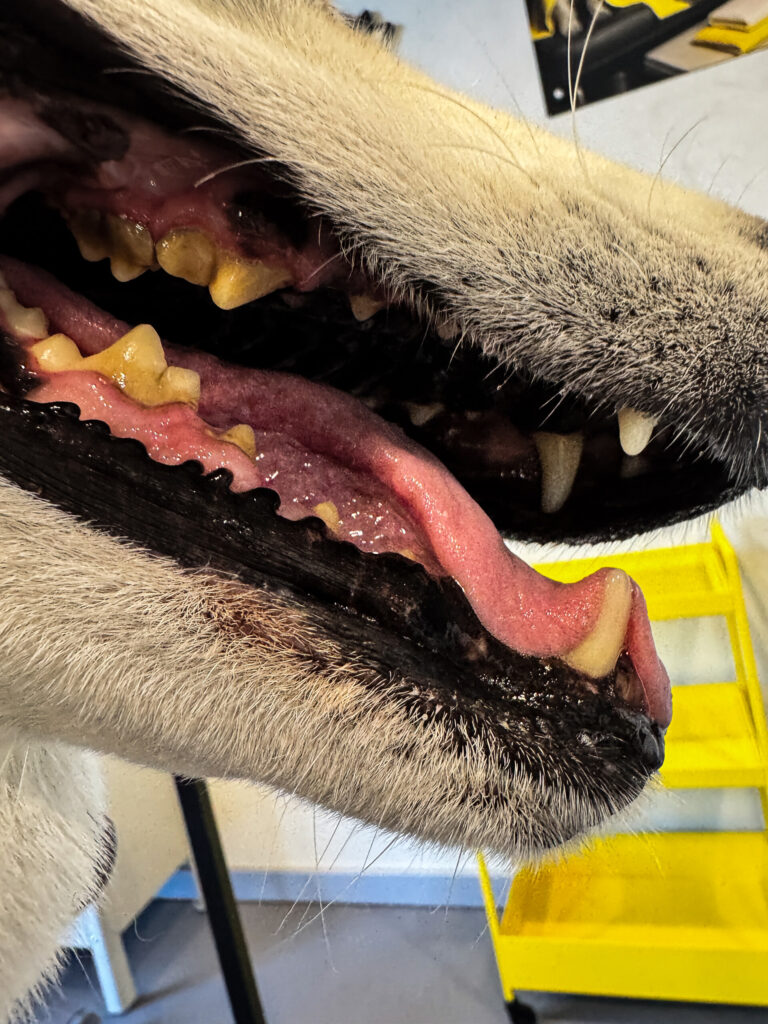
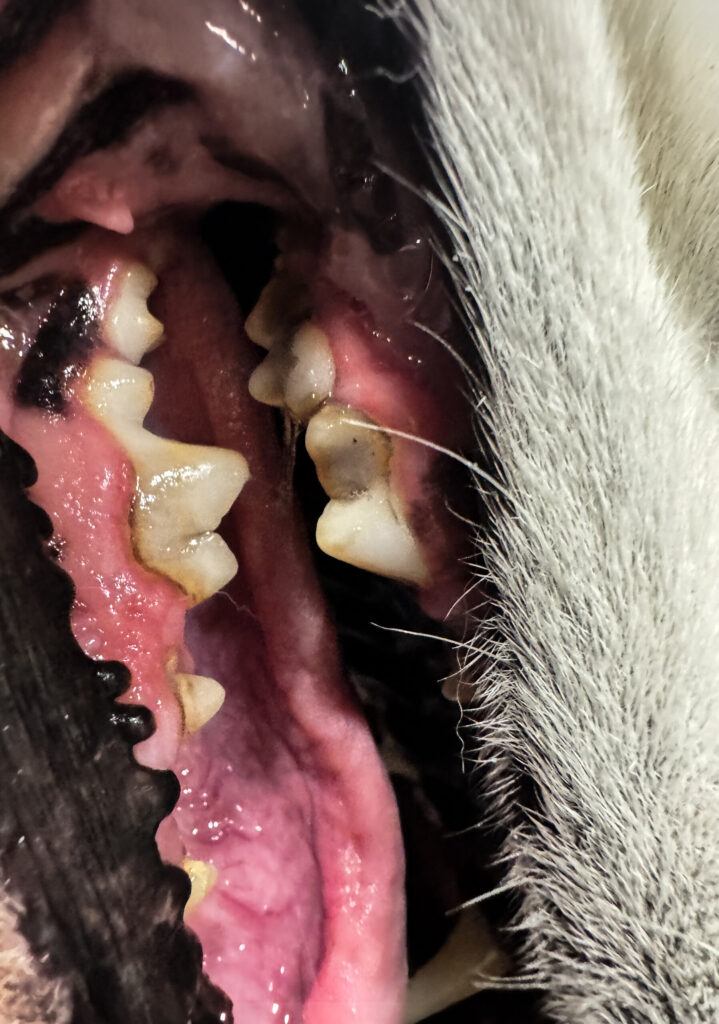
Doggy breath is normal. Breath that changes is a message. After every meal a soft, invisible film of bacteria called plaque settles along the gum line. Left alone for a couple of days, minerals in the saliva harden it into tartar, the brown crust you can see, and once it is tartar no brush will shift it. Plaque is the villain, tartar is just its statue.
That is the whole secret of dog dental care. You are not fighting tartar. You are wiping away plaque before it sets, which takes about 30 seconds and a dog willing to hold still. More on that second part in a moment.
The 30-second check
Lift your dog’s upper lip at the back, where the big teeth are. That is where tartar lands first.
- Looking good: pink gums sitting snugly against white or slightly ivory teeth.
- Worth a closer look: a red line along the gum, a yellow or brown band at the gum line, or a smell that makes you flinch.
- Call the vet: bleeding gums, a wobbly or broken tooth, dropping food, chewing on one side, or a dog who suddenly does not want the head touched.
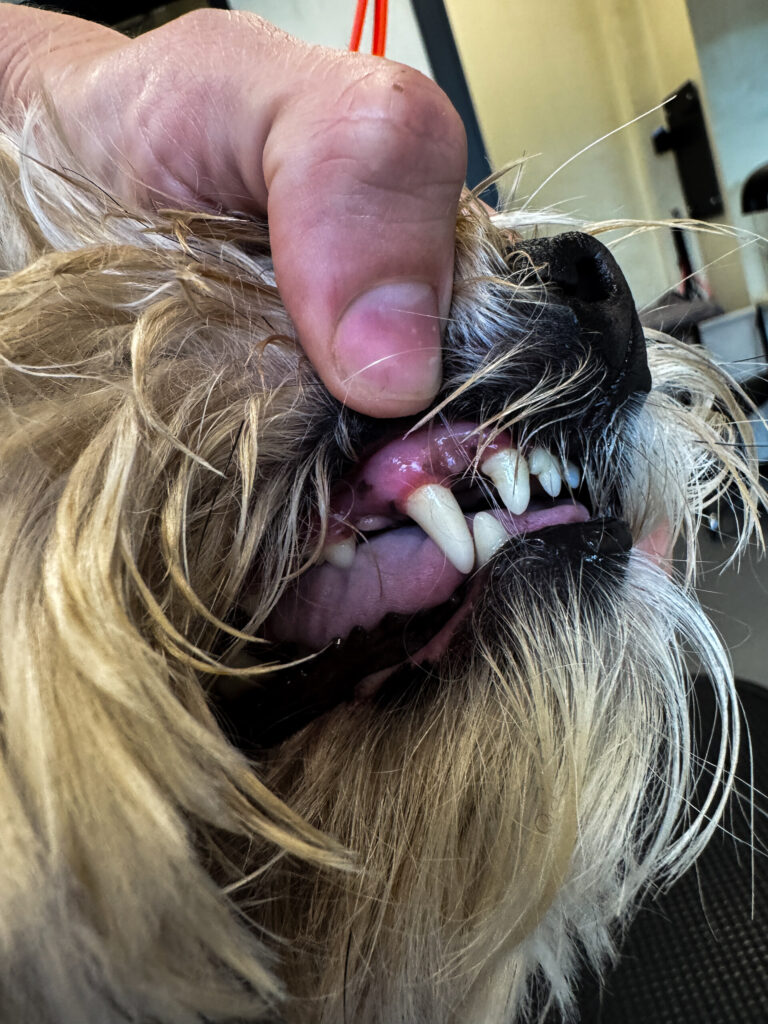
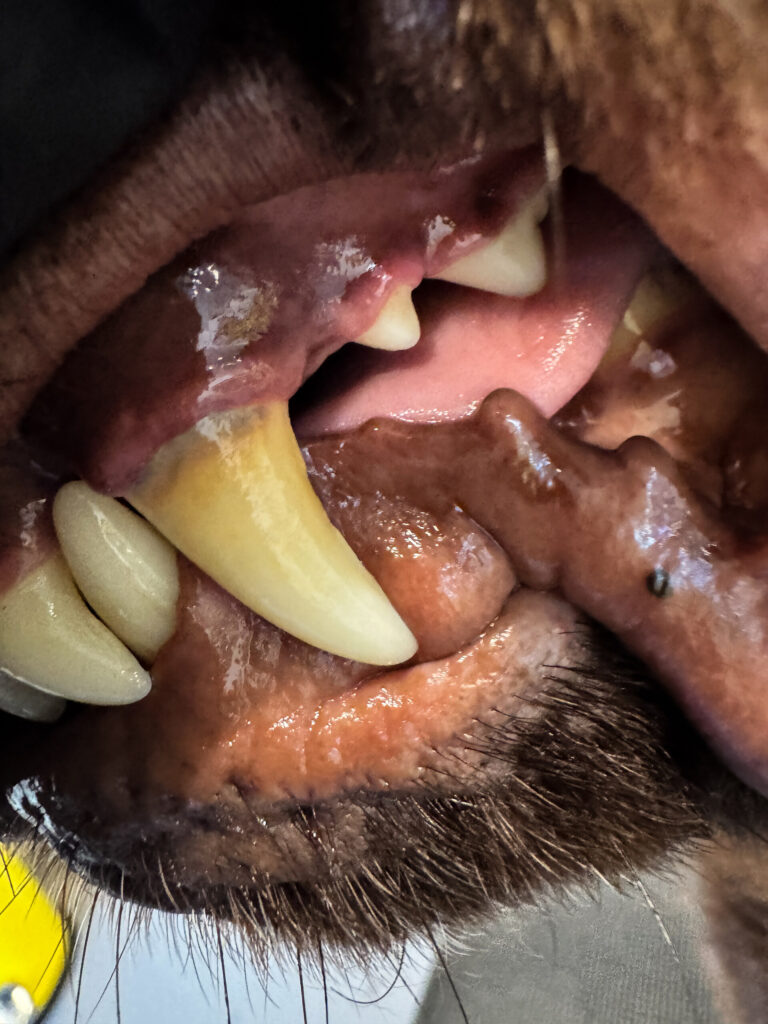
Do this weekly, with a treat at the end, and your dog will decide lip-lifting is a game.
Safe or not safe?
Safe and helpful: toothpaste made for dogs, in a flavour your dog thinks is a treat. A finger brush or soft dog toothbrush. Ultrasound cleaning, see below. Dental chews carrying the Veterinary Oral Health Council seal, the only independent test mark, used by brands across Europe. Rubber chew toys you can dent with a thumbnail.
Not safe: human toothpaste. It is not made to be swallowed, and many brands contain xylitol, listed as E967 or birch sugar, which Tox Info Suisse warns is toxic to dogs even in tiny amounts. Bones, antlers and hooves, which fracture teeth more often than they clean them. Tennis balls as a full-time chew, since years of fuzzy sandpaper wear teeth down. And “anaesthesia-free” tartar scraping, which the European Veterinary Dental College and Society describe as ineffective below the gum line and stressful for the dog.
Overrated: dry food. Most kibble shatters rather than sweeps, so it does far less cleaning than the packaging suggests.
How to make your dog like it
Nobody enjoys a hand in their mouth, so the trick is that the toothbrush arrives last, after your dog has decided this whole thing is pleasant. Spend a few days on each step, keep sessions under a minute, and stop while your dog still wants more.
- Cheek strokes. Sit beside your dog, not in front, and gently rub the muzzle. Treat. Done.
- Lift the lip. A quick peek at the teeth, then a treat. Keep it brief and bright.
- Toothpaste as a treat. Let your dog lick it off your finger. Chicken flavour changes minds.
- Finger on teeth. Rub the paste along the outside of the back teeth. Only the outside, since the tongue handles the inside surprisingly well.
- The brush. Small circles along the gum line, back teeth first, 30 seconds total. Finish with a game.
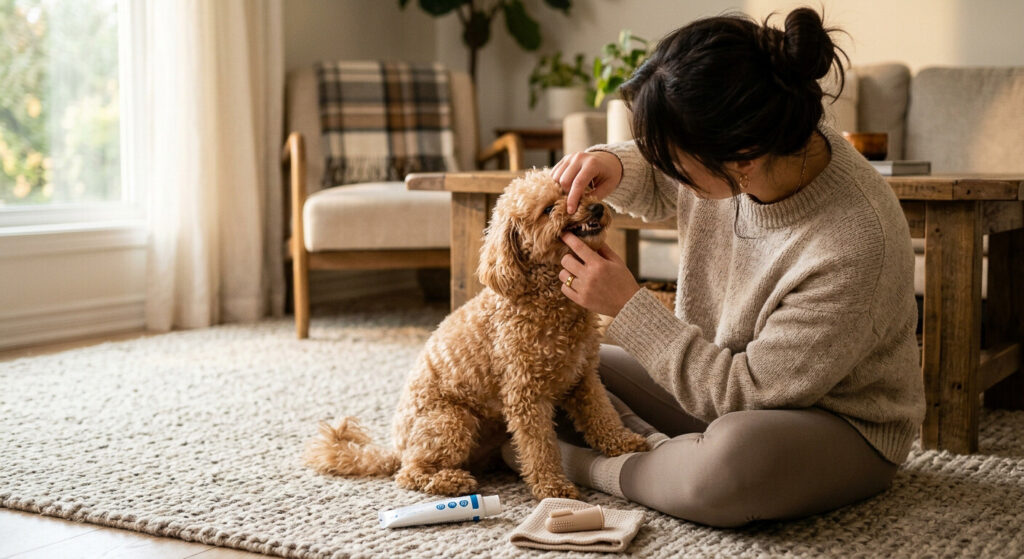
Pick a calm moment, the same time each day, and the routine soon becomes part of the cuddle rather than an interruption of it.
Ultrasound, for the dogs who said no
Some dogs, however gently you go, never make peace with a brush. Pressure, movement and noise are three good reasons to leave.
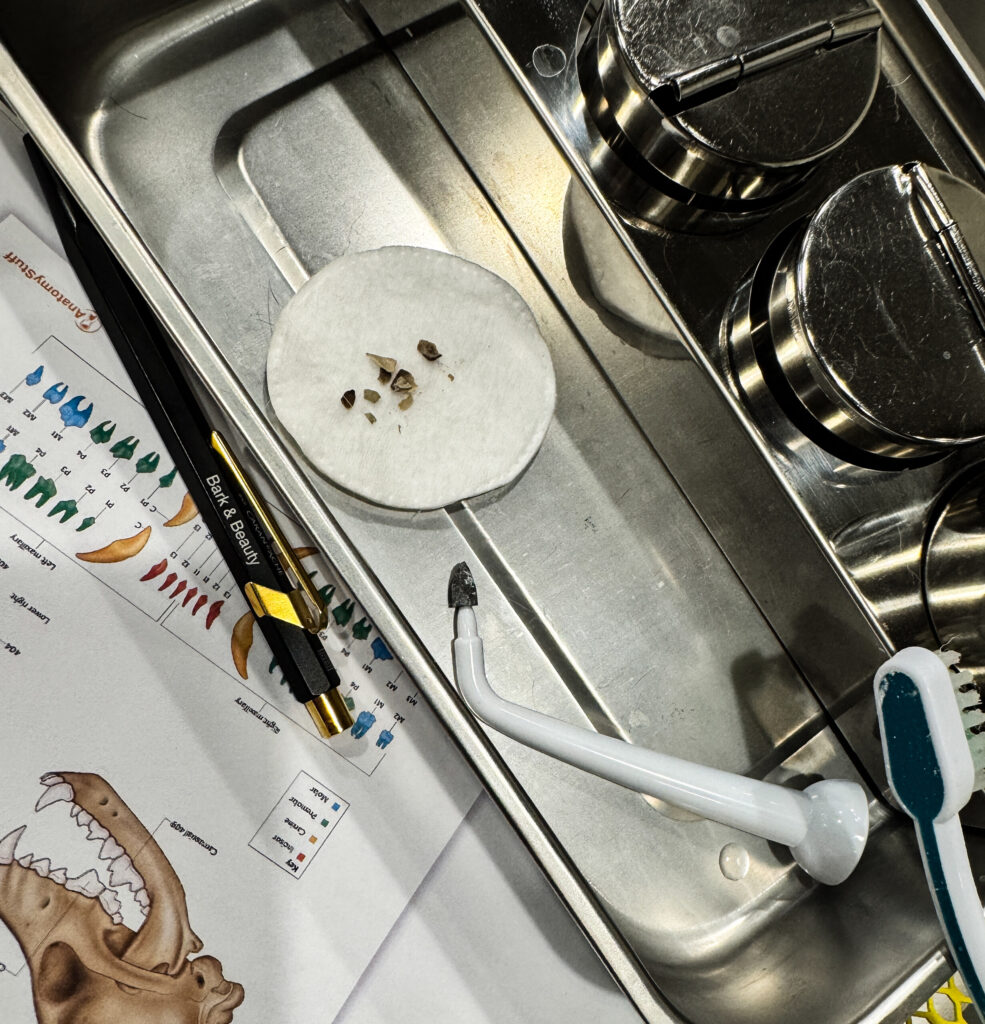
This is where ultrasound has changed the game in grooming studios, ours included. An ultrasonic brush such as the German-made emmi-pet does not scrub at all. It vibrates far too fast to be felt or heard, and the cleaning is done by a special toothpaste whose microscopic bubbles lift plaque off the tooth, right along the gum line. The head simply rests against the teeth. Silent, no scraping, nothing to brace against.
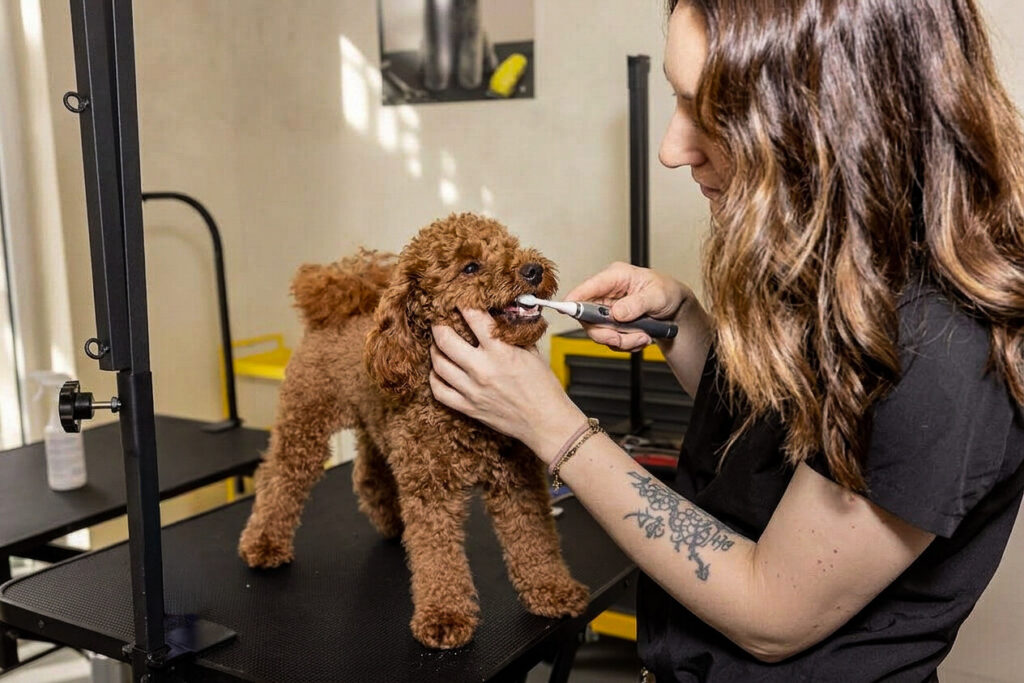
We offer initial dental assessment and ultrasound sessions alongside grooming. We also keep emmi-pet sets for home use available for purchase and will show you how to use it on your own dog before you leave, because daily at home beats occasional at the studio every time.
And your vet
Everything above keeps a healthy mouth healthy. Once tartar has built up or the gums are sore, it is a job for your vet, under anaesthesia, so they can clean below the gum line and X-ray the 60 per cent of each tooth nobody can see. You brush at home, you still see the dentist. Same for your dog.
The routine, in one breath
- Daily: 30 seconds of brushing or ultrasound, with dog toothpaste.
- Weekly: lift the lip and look at the back teeth.
- Every groom: ask your groomer about their dental services and add one to your dog’s grooming routine.
- Yearly: your vet looks properly and tells you if a clean is due.
Frequently asked questions
Daily is best, because plaque hardens into tartar within a couple of days. Every other day still works. Once a week, sadly, does not.
No. It is not made to be swallowed and often contains xylitol (E967), which is toxic to dogs. Use a toothpaste made for dogs.
No. They are hard enough to fracture teeth. Choose chews you can dent with a thumbnail.
No. Ultrasound and brushing manage plaque and prevent disease. Established tartar and sore gums need a veterinary clean under anaesthesia.
Bark & Beauty is a mindful premium dog grooming studio in Adliswil near Zurich, offering ultrasound dental care sessions alongside grooming, and stocking emmi-pet sets for home use. Bookings at book.barkandbeauty.ch. Have any questions? – reach out via WhatsApp.